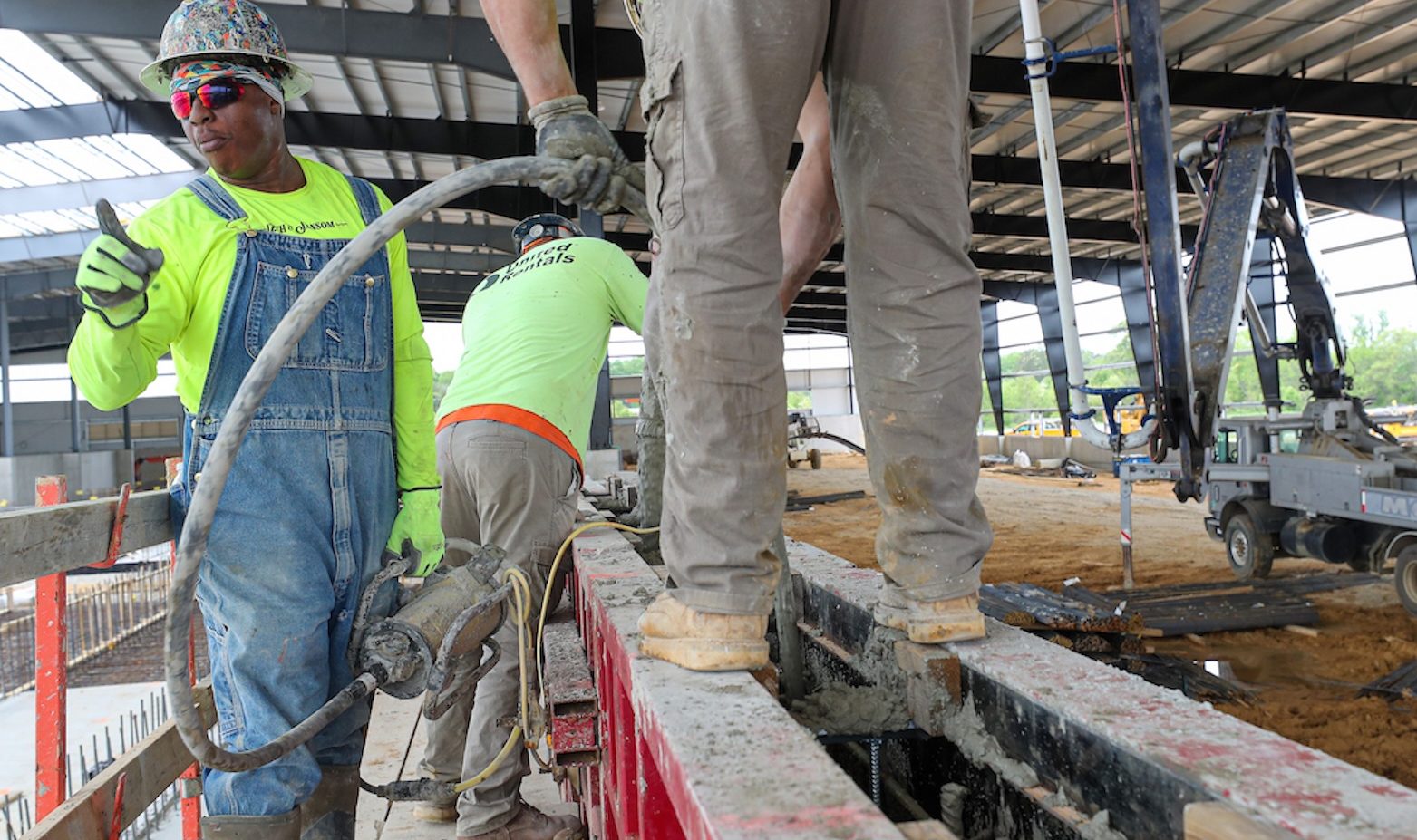
Union carpenters deliver quality craftsmanship on job sites governed by project labor agreements.
A step-by-step project labor agreements guide for owners and officials
This project labor agreements guide walks public owners through seven steps, from deciding whether a job needs a PLA to closing one out. A project labor agreement is a pre-hire agreement that sets wages, benefits, work rules and dispute procedures for every contractor on one construction project, and the order in which an owner builds it shapes how well it works.
Definitions, legal history and state thresholds are covered across whatisapla.com. This guide focuses on the practical sequence, drawing on how owners such as Fairfax County, Virginia, put together the first local government PLA in that state.
Owners do not have to build the workforce side from scratch. The Eastern Atlantic States Regional Council of Carpenters represents 42,000 union carpenters in the region, and its apprenticeship programs supply the trained workers a PLA is written to deliver.
How does a public owner decide whether a project needs a PLA?
Step 1 is a project assessment. PLAs deliver the most value on large jobs with multiple prime contractors or trades on one site, fixed deadlines and a high daily cost if work stops. Owners should also ask whether they need verifiable local hiring or apprenticeship results, because a PLA is the place to write those goals down.
Step 2 is confirming legal authority. Rules vary by jurisdiction. Federal agencies must require PLAs on construction of $35 million or more under FAR Subpart 22.5, Virginia lets each public body decide, the District of Columbia requires them above set thresholds and West Virginia bars public owners from requiring them.
Who negotiates a project labor agreement and what goes in it?
Step 3 is documenting the decision and building the team. Several states require written findings. New Jersey, for example, asks public entities to explain how a PLA serves cost, efficiency, quality, timeliness, safety and a skilled workforce given the project’s size and complexity. Many owners hire a PLA consultant at this stage, and Loudoun County, Virginia, sought proposals for PLA consulting services in 2024.
Step 4 is negotiation. The owner or its construction manager negotiates with the regional building trades council. Fairfax County developed its terms with the Baltimore-DC Metro Building Trades Council, prequalified general contractors, a PLA consultant and county legal staff. Core terms cover wages and benefits, work rules, safety, apprenticeship ratios, local hiring goals and binding dispute resolution.
How does bidding work under a project labor agreement?
Step 5 is competitive bidding with the PLA attached. Every bidder prices the same labor terms, so competition turns on skill, management and efficiency. Any qualified contractor, union or non-union, can bid and win. The evidence supports open competition: a 2025 Illinois Economic Policy Institute and University of Illinois study of 773 public projects found PLA projects drew 14% more bids, and a peer-reviewed study of 263 California community college bid openings found no effect on bidder counts. On price, the strongest peer-reviewed research answers do PLAs increase costs with no statistically significant effect.
READ MORE: PLA report guide: What owners and taxpayers should expect
What happens after a PLA contract is awarded?
Step 6 is administration. A mobilization meeting among the owner, contractors and unions surfaces gaps while they are still administrative. Disputes go to the agreement’s grievance and arbitration process instead of stopping the job, and the owner collects workforce, apprenticeship and local hiring data as work proceeds. A peer-reviewed study of 313 public works projects in Sacramento County, California, found PLA projects finished 15% to 17% faster, a result the authors tied to no-strike terms, dispute procedures and access to skilled labor.
Step 7 is closeout. The agreement ends when the project does, and a final report on schedule, workforce and compliance gives the next board the record it needs for the next project. A short video explainer on project labor agreements is a useful primer for new board members and staff before that next decision.
READ MORE: PLAs are the smarter choice for taxpayers
Which public projects are the best fit for a PLA?
The record in the Eastern Atlantic states points to large, multi-trade jobs that cannot afford to stall. Fairfax County chose its largest wastewater pump station, a facility that must keep running while crews rebuild it. Loudoun County’s finance committee picked a detention center expansion and a road widening, citing large scope, varied trades, long timelines and multi-agency coordination. Washington, D.C., built Banneker High School under its PLA requirement, and the Port of Wilmington’s Edgemoor expansion in Delaware broke ground under a PLA. The common thread is complexity. When dozens of subcontractors share one site and one deadline, a single set of rules and a binding dispute process protect the schedule for everyone.
The seven steps at a glance:
- assess the project’s size, trades, schedule and workforce goals
- confirm legal authority under federal, state or local rules
- document the decision and assemble the PLA team
- negotiate terms with the regional building trades council
- bid the project with the PLA attached and open to all qualified contractors
- administer the agreement and track workforce data
- close out the project and publish the results
Owners ready for the next step can find guides, research and case studies at whatisapla.com and see the full range of benefits a well-run PLA delivers.
Frequently Asked Questions
What is the first step in using a project labor agreement?
A project assessment. Owners weigh size, number of trades, schedule risk and workforce goals before deciding a PLA fits.
Who negotiates a project labor agreement?
The project owner or its construction manager negotiates with one or more building trades unions, usually through a regional building trades council, before bidding opens.
When should a PLA be negotiated?
Before the project goes out to bid. The signed agreement becomes part of the bid documents so every contractor prices the same labor terms.
Do owners need a consultant to set up a PLA?
Not always, but many hire one for a first agreement. Fairfax and Loudoun counties in Virginia both used or sought PLA consultants.
Can non-union contractors bid on a PLA project?
Yes. Any qualified contractor can bid and win, and its workers follow the agreement’s terms for that project.
How long does a project labor agreement last?
For the life of the covered project. The agreement ends when construction is complete.
Are PLAs required on federal construction?
Yes, on large projects. FAR Subpart 22.5 requires PLAs on federal construction of $35 million or more unless an exception applies.
What should an owner track during a PLA project?
Workforce hours, apprenticeship use, local hiring, safety and dispute outcomes. That record supports public reporting at closeout.
Do PLAs help projects finish faster?
A peer-reviewed study of 313 Sacramento County public works projects found PLA projects finished 15% to 17% faster than comparable projects.