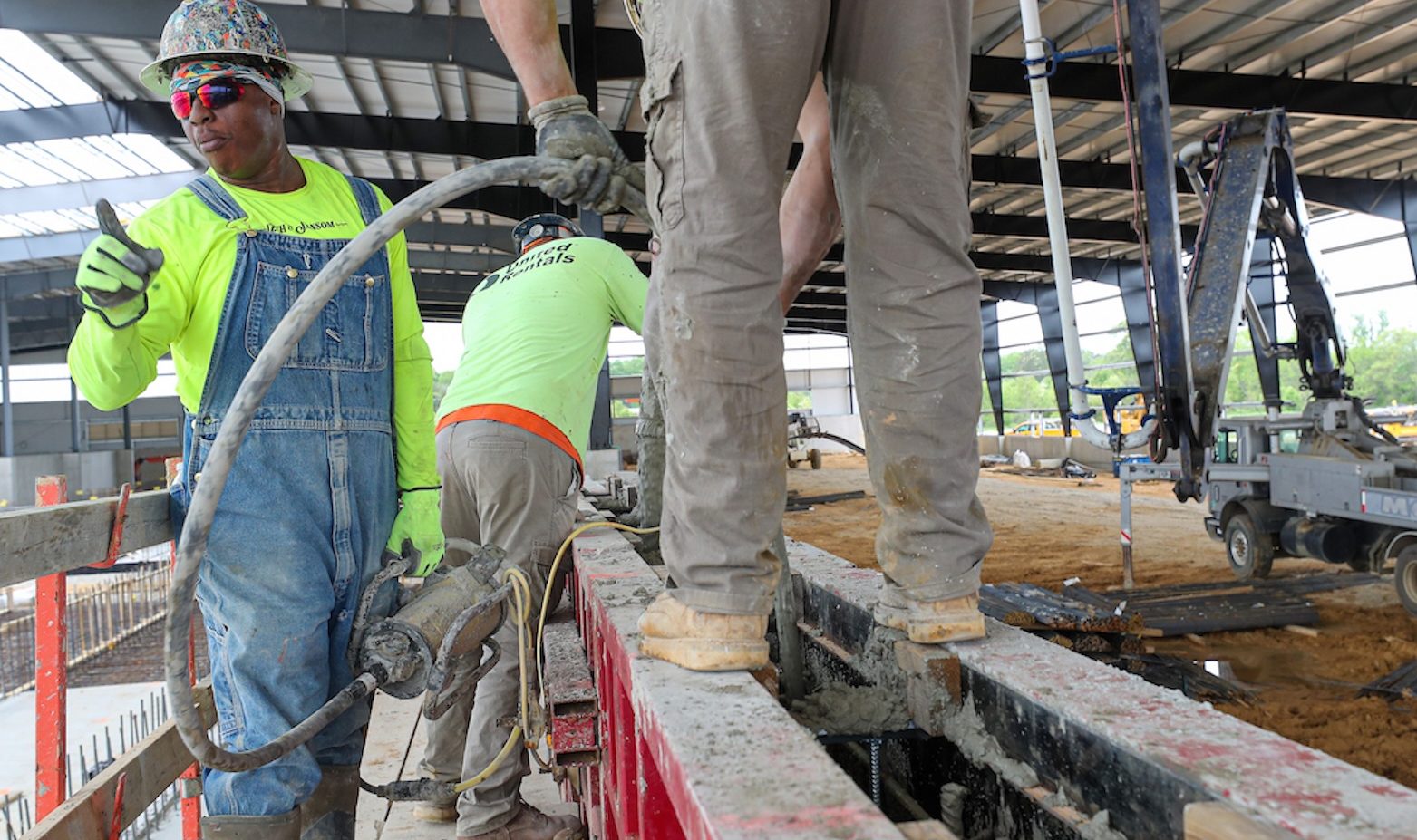
Project labor agreements set one standard for every worker on the job.
Sections 8(e) and 8(f) explained: why the NLRA and PLAs work together
The NLRA and PLAs fit together by design: the National Labor Relations Act does not prohibit project labor agreements, and two provisions Congress added in 1959 were written to allow them in construction. A project labor agreement, or PLA, is a prehire contract for one construction job, and federal labor law carves out a specific exception that lets builders and unions sign one before a single worker is hired.
The question still comes up in council meetings and school board hearings, usually framed as a legal risk. whatisapla.com tracks the law behind that debate, and the statute itself is short enough to read in a few minutes.
For the Eastern Atlantic States Regional Council of Carpenters, which represents 42,000 union carpenters in six states and Washington, D.C., these provisions are the everyday legal footing for public and private work across the region.
What does Section 8(f) of the NLRA allow?
Section 8(f) of the NLRA, codified at 29 U.S.C. § 158(f), lets an employer “engaged primarily in the building and construction industry” sign an agreement with a union before the union shows majority support among the employer’s workers. In most industries, that kind of prehire agreement would be an unfair labor practice. Congress made the exception in the Landrum-Griffin Act of 1959 because construction workforces assemble project by project. A contractor often needs to know its labor costs and its supply of skilled workers before it bids, long before the crew is hired. Section 8(f) also allows these agreements to set up union referral of workers and to give priority based on training or experience in the industry.
READ MORE: Are project labor agreements legal? Yes. Here is the law behind them
Why did Congress treat construction differently?
Construction work does not look like work in a factory or an office. A general contractor may assemble a crew of several hundred workers for one project, release them when the job ends and hire a different crew across town the next month. Many tradespeople work for several employers in a single year. Under the normal NLRA process, a union must show majority support among an employer’s current workers before bargaining. In construction, that group often does not exist yet when the bid goes in. Congress recognized that gap in 1959 and wrote Section 8(f) so builders could lock in labor terms, skilled referrals and wage rates before the work begins.
READ MORE: PLA vs collective bargaining agreement
How does Section 8(e) treat construction subcontracting?
Section 8(e) generally bars agreements in which an employer stops doing business with another company. But the same 1959 amendment added a construction proviso. It states that the ban does not apply “to an agreement between a labor organization and an employer in the construction industry relating to the contracting or subcontracting of work to be done at the site of the construction.” That proviso is what allows a PLA to bind every subcontractor on a job site to the same terms. The proviso applies to work performed at the construction site itself. Without it, a project-wide agreement covering dozens of firms would be hard to enforce.
Did the Supreme Court rule on the NLRA and public PLAs?
Yes. In the Boston Harbor case, 507 U.S. 218, decided March 8, 1993, the U.S. Supreme Court ruled 9-0 that the NLRA does not preempt a public owner’s decision to require a PLA. The dispute arose from the harbor cleanup, where the Massachusetts Water Resources Authority required bidders to follow an agreement its project manager, Kaiser Engineers, negotiated with the building trades. Justice Harry Blackmun wrote that federal preemption doctrines “apply only to state labor regulation.” When a public body buys construction services as a market participant, it may act as a private owner would, and Congress had expressly allowed private owners to use these agreements.
What limits still apply to PLAs under federal law?
The NLRA permits PLAs, but it does not force any owner to use one. States set their own procurement rules, which is why New Jersey and Virginia authorize public PLAs while West Virginia bars public owners from requiring them. Workers keep their rights under Section 7 of the NLRA on every PLA job. In right-to-work states, state law still bars requiring union membership as a condition of employment, and that rule applies on PLA projects too. For federal construction, Executive Order 14063 builds on this legal base by requiring PLAs on projects of $35 million or more, and agencies may also use them on smaller jobs. The cost question is separate from the legal one, and the research answer to do PLAs increase costs is no.
Key facts on the NLRA and PLAs:
- Section 8(f) allows construction employers to sign prehire agreements before hiring
- the Section 8(e) construction proviso allows agreements that cover subcontracted work at the job site
- both provisions were added by the Landrum-Griffin Act of 1959
- the Supreme Court ruled 9-0 in 1993 that public owners may require PLAs as market participants
- state procurement law, not the NLRA, decides whether a public owner may require one
Officials and contractors who hear that PLAs break federal labor law can check the myths against the facts at whatisapla.com and see the benefits the law was written to protect.
Frequently Asked Questions
Does the National Labor Relations Act prohibit project labor agreements?
No. Sections 8(e) and 8(f) of the NLRA, added in 1959, specifically allow prehire agreements and job-site subcontracting terms in the construction industry.
What is Section 8(f) of the NLRA?
Section 8(f) lets construction employers sign agreements with unions before hiring workers and before the union shows majority support. It exists because construction crews assemble project by project.
What is the construction proviso in Section 8(e)?
It exempts construction agreements covering the contracting or subcontracting of work at the job site from the NLRA’s general ban on such agreements. That lets a PLA bind every subcontractor on the site.
When were Sections 8(e) and 8(f) added to the NLRA?
Congress added both in the Landrum-Griffin Act of 1959.
What did the Supreme Court decide in the Boston Harbor case?
In 1993 the Court ruled 9-0 that the NLRA does not preempt a public owner’s decision to require a PLA when it acts as a market participant buying construction services.
Can a state ban public project labor agreements?
Yes. States set their own procurement rules, and West Virginia bars public owners from requiring PLAs. Private owners there may still use them.
Do workers lose NLRA rights on a PLA project?
No. Workers keep their Section 7 rights on every PLA project, and right-to-work laws still apply where states have them.
Does federal law require PLAs on any projects?
Executive Order 14063 requires PLAs on federal construction of $35 million or more unless an exception applies.
Do PLAs raise construction costs?
No. A research review of more than 20 years of studies found no statistically significant cost effect in the strongest research.