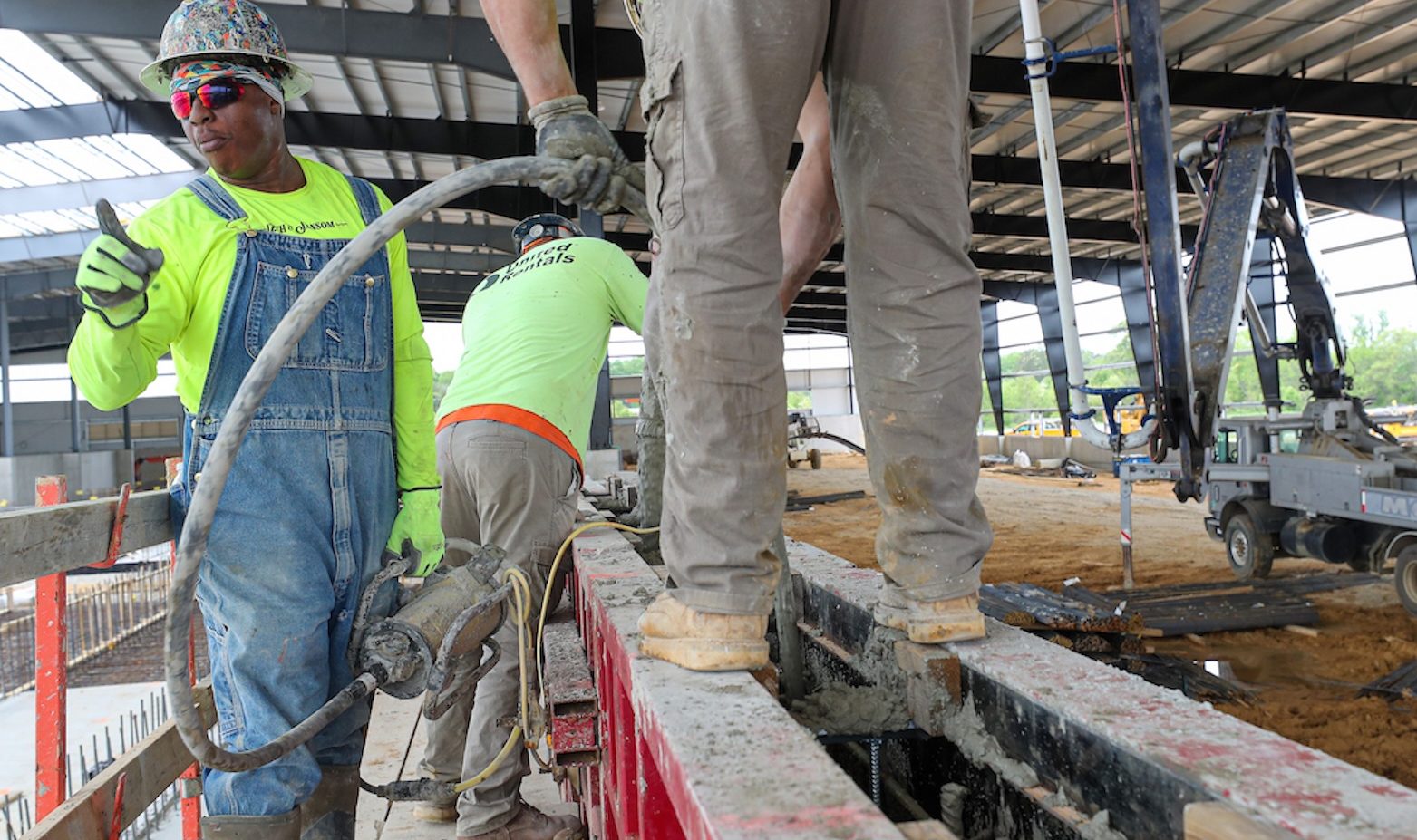
Union carpenters deliver quality craftsmanship on job sites governed by project labor agreements.
Research-backed PLA advantages for public owners and taxpayers
The biggest advantages of a project labor agreement for a public owner are a faster schedule, labor peace and a dependable supply of skilled workers, all settled before construction starts. A project labor agreement puts every contractor on the job under one set of rules for pay, safety, hours and disputes, so the owner manages a single framework instead of a patchwork of separate labor arrangements.
Those advantages show up in the data, not just in the pitch. WhatisaPLA.com tracks the peer-reviewed research and public records behind each claim so county boards, school districts and state agencies can weigh the evidence for themselves before voting on their next capital project.
The workforce side of the equation is already in place across the mid-Atlantic. The Eastern Atlantic States Regional Council of Carpenters counts 42,000 members in New Jersey, Pennsylvania, Delaware, Maryland, Virginia, West Virginia and Washington, D.C., and its apprenticeship programs add trained carpenters to that pool every year.
Do project labor agreements help public projects finish on time?
The strongest evidence says yes. A 2025 ILR Review study by Larissa Petrucci, Matthew Hinkel and Grace Dunn examined 313 public works projects in Sacramento County, California, and found that PLA projects finished 15% to 17% faster than comparable projects after controlling for cost, project type and the awarding agency. PLA projects were also 43% more likely to wrap up within the following year. For an owner, a shorter build means lower financing and overhead costs, earlier use of a new school or treatment plant and fewer months of disruption for neighbors.
How does a PLA protect a project from strikes and delays?
Every PLA on a federal project must include guarantees against strikes, lockouts and similar disruptions, along with prompt and binding procedures for settling disputes, under FAR 22.504. State and local agreements follow the same model. Jurisdictional disagreements between trades, grievances over pay and scheduling conflicts go to a set process instead of a picket line. That protection matters most on large, multiyear jobs, where several union contracts may expire during construction. Without an agreement, any one of those expirations can idle an entire site.
READ MORE: How Project Labor Agreements Create Greater Construction Certainty
Do project labor agreements limit bidding competition?
No. A 2025 study of 773 Illinois projects found the opposite. The Illinois Economic Policy Institute and University of Illinois study of state Capital Development Board work found PLAs increased bidding by an average of 14%. Each added bid raised the odds that a project came in under the engineer’s estimate by 6%, and PLAs had no effect on total construction costs once project size, location and type were considered. Owners weighing the price question can start with the research roundup that asks do PLAs increase costs.
Why does a ready workforce matter to project owners?
Labor shortages are now a schedule risk on almost every public job. In the Associated General Contractors of America’s 2025 workforce survey, 92% of responding firms said they had trouble filling craft positions, and 45% reported project delays tied to worker shortages. A PLA connects the owner to union hiring halls and registered apprenticeship programs that can staff a job quickly with workers who already hold the required safety and skills credentials. Many agreements also set apprentice ratios and local hiring goals, so the project trains the next generation of workers while it gets built.
Does a PLA give owners more cost certainty?
Labor is one of the largest and least predictable line items in a construction budget. A PLA sets wage and benefit rates for the life of the project and publishes them in the bid documents, so every bidder prices labor with the same known numbers. The owner is not exposed to a midproject renegotiation between a contractor and a union, and it does not inherit the cost of a work stoppage if one of those talks breaks down. That predictability helps finance officers set contingencies with more confidence and gives elected officials a firmer figure when they approve a bond or capital plan.
Which public projects gain the most from a PLA?
Large, complex public works gain the most. A 2025 study in Public Works Management and Policy by Kevin Conner and Peter Philips reviewed 450,425 California public projects and found that PLAs covered only 2% of projects but 15% of construction value. Owners reserve them for multitrade, multiyear work, where a single agreement also gives the owner a clear line of accountability. Certified payroll, apprentice hours and grievance records all flow through one document, which makes it easier for a board or a public auditor to see who worked on the job, what they were paid and how problems were solved.
Key advantages of a project labor agreement for public owners:
- faster completion: 15% to 17% quicker on Sacramento County public works
- labor peace: no strikes or lockouts for the life of the project
- more bidders: 14% more bids per project in Illinois
- a trained workforce: union hiring halls and registered apprentices ready to staff the job
- clear records: one agreement for payroll, apprentice hours and dispute tracking
Board members and capital planners can explore every benefit of PLAs at whatisapla.com, from faster schedules to stronger local workforces.
READ MORE: Union Contractors Complete Public Projects Faster, Study Finds
Frequently Asked Questions
What are the advantages of a project labor agreement?
The main advantages for public owners are faster completion, protection from strikes and lockouts, strong bidding competition and access to a trained workforce. All of them are set in writing before construction begins.
Do project labor agreements make projects finish faster?
A 2025 ILR Review study of 313 Sacramento County public works projects found PLA projects finished 15% to 17% faster than comparable projects. The study controlled for project cost, type and awarding agency.
Do PLAs prevent strikes on construction projects?
Yes. PLAs include no-strike and no-lockout guarantees, along with binding procedures for settling disputes for the life of the project.
Do PLAs reduce the number of bidders?
No. A 2025 study of 773 Illinois Capital Development Board projects found PLAs increased bidding by an average of 14%.
Do project labor agreements raise construction costs?
The Illinois study found PLAs had no effect on total construction costs after accounting for project size, location and type. Peer-reviewed research reaches the same conclusion.
Why do public owners use PLAs on large projects?
Large, multiyear projects involve many trades and several labor contracts that can expire during construction. A PLA puts all of them under one agreement, which lowers the risk of delays.
How do PLAs help with construction labor shortages?
PLAs give contractors access to union hiring halls and registered apprenticeship programs. That matters when 92% of contractors in a 2025 national survey reported trouble filling craft positions.
Can non-union contractors work on a PLA project?
Yes. Federal rules require PLAs to let all contractors compete regardless of union status, and non-union firms sign on for the length of the project.
Who benefits from a project labor agreement besides the owner?
Taxpayers gain from on-time delivery, and workers gain fair pay, safety standards and training. Local communities benefit when agreements include local hiring goals.