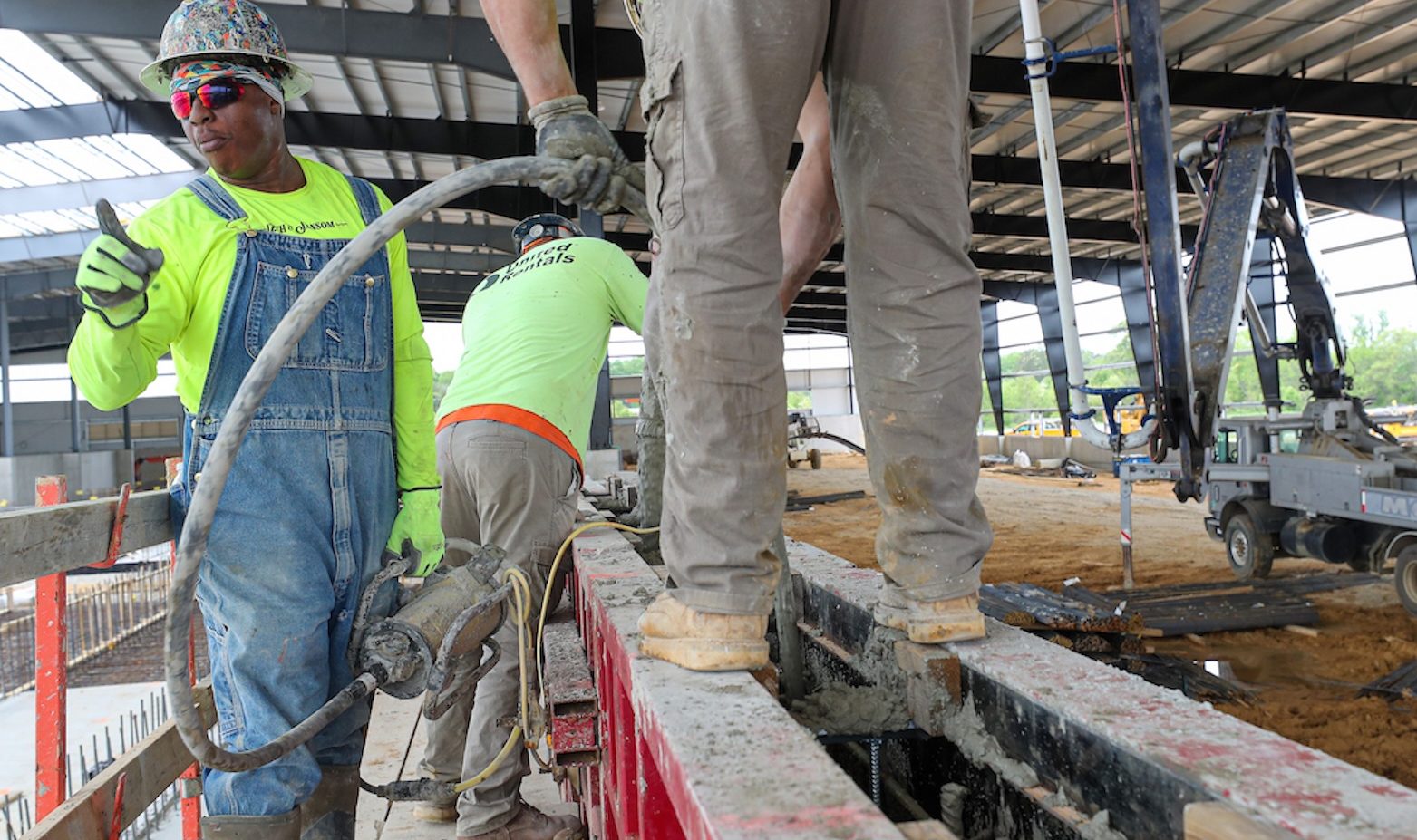
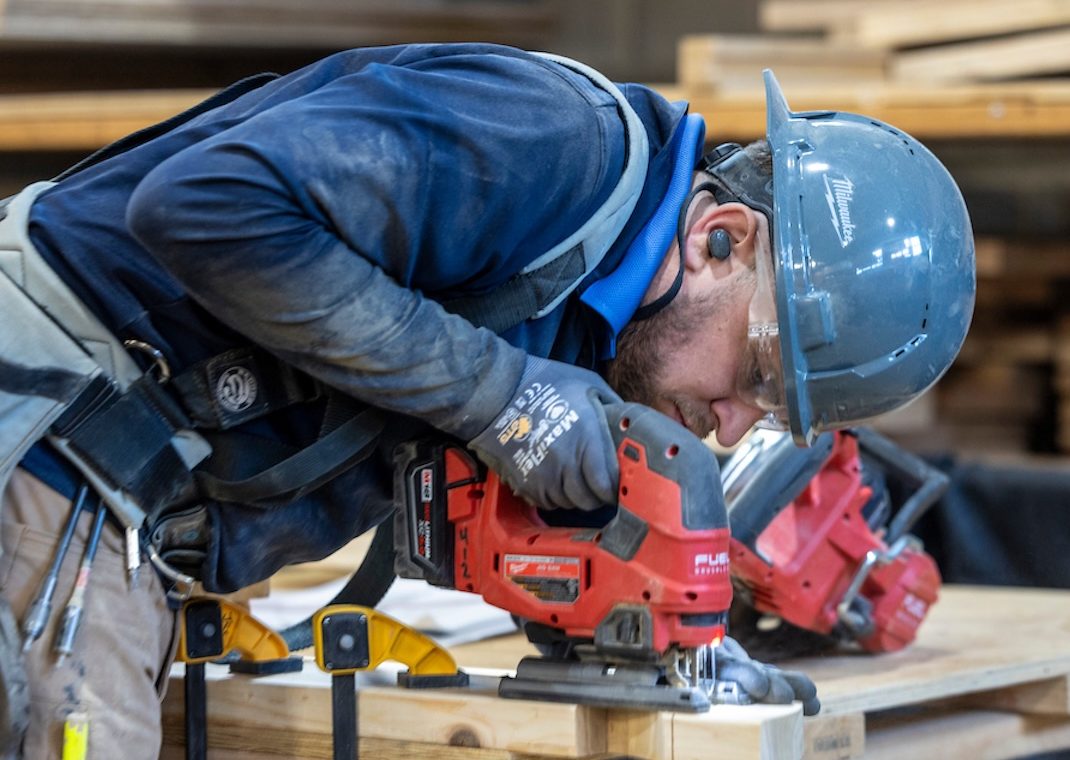
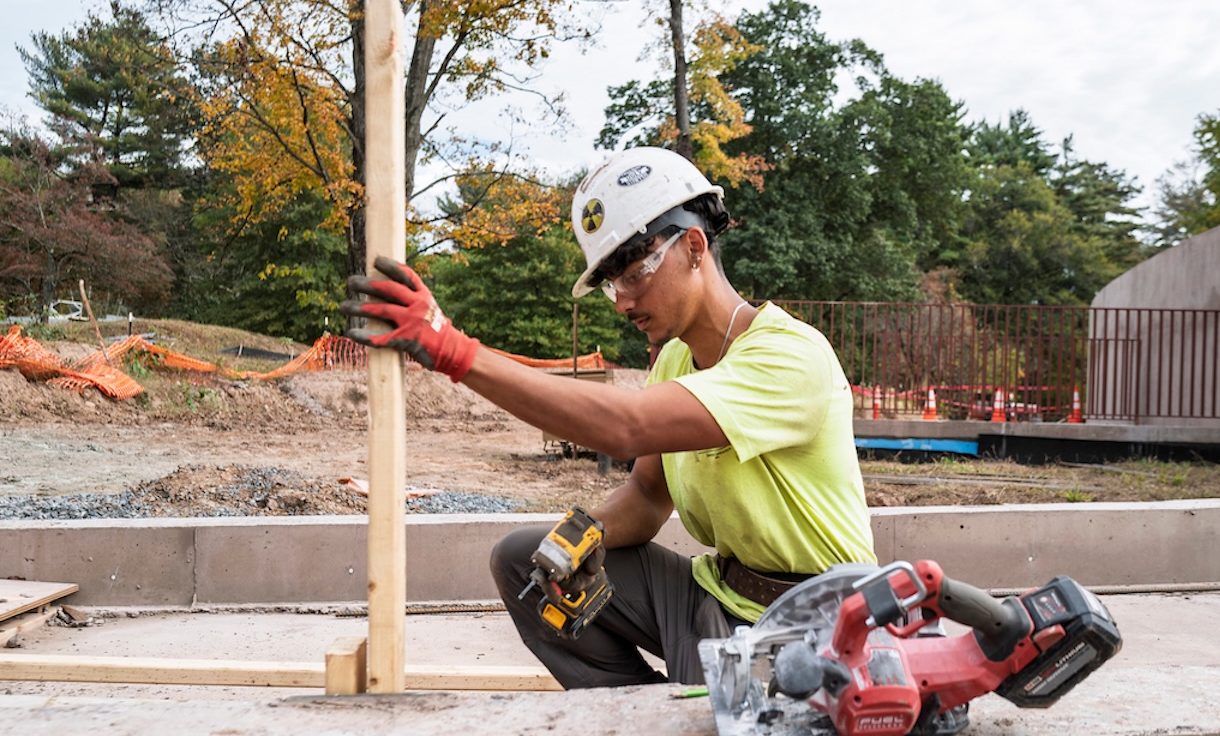
Union carpenters and other skilled labor tradespeople working.
Project Labor Agreements (PLAs) play a central role in ensuring job security and stable working conditions for union construction workers — and a new report from NJ Business Magazine underscores just how important a steady pipeline of public and private projects is to keeping that workforce employed.
New Jersey’s building trades are reporting overwhelming interest in apprenticeship programs. Key drivers include the ability to earn while learning, rising college costs, and AI-driven concerns about white-collar job security.
Work is particularly strong in AI data center construction, pharmaceutical, and higher education sectors. IBEW 102 President Bernie Corrigan points to CoreWeave’s $1.8 billion AI data center in Kenilworth as a major job creator, noting it’s among the strongest work periods his union has seen in two decades.
But union leaders are clear: workforce growth must be matched by project volume. As the Associated Construction Contractors of New Jersey (ACCNJ) put it:
“Unfortunately, the trend we are seeing is a lack of projects to put people on. Increased funding from both the state and federal governments for public infrastructure and public works projects would help create consistent job opportunities. Similarly, improved access to financing for private developers would allow more projects to move forward.”
IUOE 825 Business Manager Greg Lalevee echoed the need for stability, warning that funding uncertainty — like the brief federal hold on Gateway tunnel project funding — drives up contractor costs and puts workers on the sidelines. “Shutdowns come at an immense cost,” added LIUNA’s Rob Lewandowski, whose members work on the $16 billion Gateway project.
Lalevee also advocated for a strong mix of mid-level projects — those ranging from $10 million to $100 million — as the most effective way to spread work across more contractors and union members.